
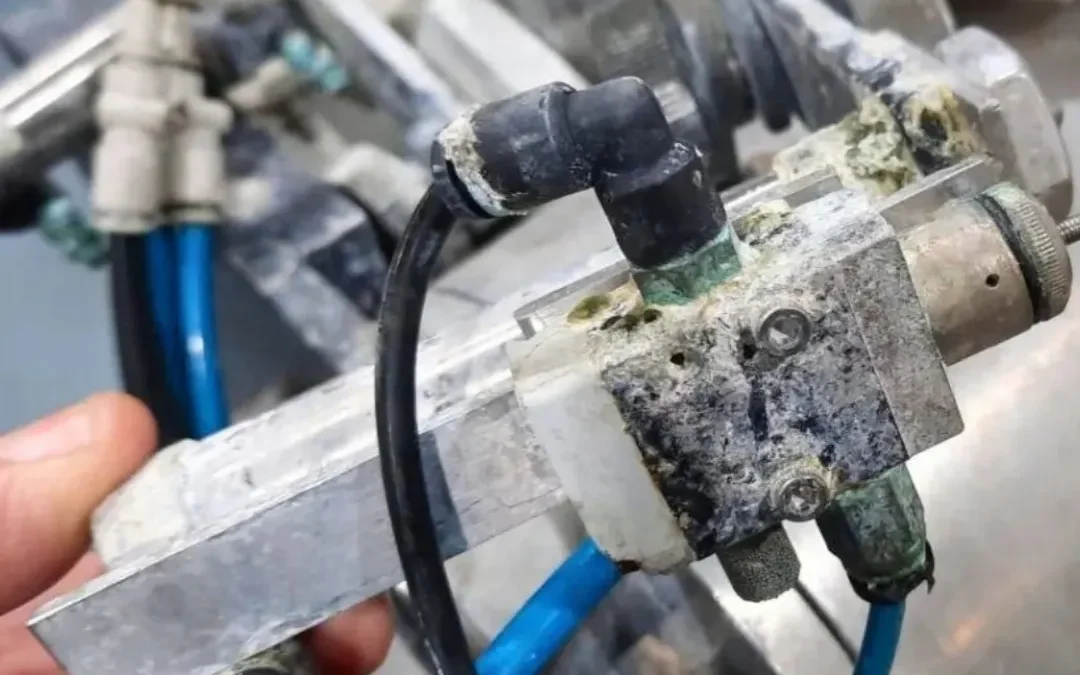
Water and compressed air do not make a good team.
A small amount of moisture inside a pneumatic system might not cause an obvious problem today, but leave it there long enough, it can lead to corrosion, sticking valves, damaged seals, and unreliable cylinder movement. Eventually, something that started as a little condensation can become an expensive maintenance problem.
For factories, workshops, and production facilities that rely on pneumatic equipment every day, keeping compressed air clean and dry is simply good preventative maintenance.
Here is where moisture comes from, what it can do to your equipment and, most importantly, how to keep it under control.
Why Does Moisture Build Up in a Pneumatic System?
Moisture builds up because the air entering your compressor already contains water vapour.
When that air is compressed, its temperature rises. As the compressed air travels through the system and cools down again, some of the water vapour turns into liquid condensation. If that water is not removed, it can travel through the air lines towards cylinders, valves and other components.
Humidity and changes in temperature can influence how much condensation forms, so the amount of moisture in a system will not necessarily remain the same throughout the year.
Some condensation is a normal part of producing compressed air. The important part is making sure it is removed before it reaches equipment that can be damaged by it.
What Damage Can Moisture Cause in a Pneumatic System?
Moisture can cause corrosion, damage seals, contaminate air lines, and interfere with the operation of pneumatic components.
The difficult part is that much of this damage happens inside the system, where you cannot easily see it. A valve might start sticking occasionally, or a cylinder may become less consistent. These can seem like isolated problems when the real issue is poor compressed air quality.
Common signs of moisture-related problems include:
- Corrosion inside components and pipework
- Valves becoming slow or unreliable
- Premature wear on seals
- Water appearing in air lines
- Inconsistent cylinder movement
- Increased maintenance requirements
- More frequent component failures
If you are investing in quality pneumatic components in South Africa, looking after the compressed air feeding those components is one of the simplest ways to protect that investment.
How Do Air Filters Help Prevent Moisture Damage?
Air filters help prevent moisture damage by removing liquid water and other contaminants before they can travel further through the pneumatic system.
Think of filtration as the system’s first line of defence. Once compressed air leaves the compressor, it needs to be prepared before reaching sensitive equipment. The right filtration setup helps remove water, dirt and other unwanted contaminants.
This protects components further down the line, including cylinders, valves and fittings.
The filter itself also needs regular attention. If a filter bowl fills with condensate or the filter element becomes clogged, its performance can suffer.
Pnumatics Cape supplies filters and air preparation components for a wide range of pneumatic applications. Choosing the right industrial air filtration system will depend on your equipment, operating environment, and required air quality.
Why Is Regularly Draining Condensate Important?
Regular drainage is important because filters, receivers, and other parts of a compressed air system can collect water during everyday operation.
If that water is left sitting in the system, it has more opportunity to cause corrosion or travel further down the air line.
Drainage should therefore be part of normal maintenance rather than something that only happens when somebody notices water where it should not be.
How often you need to drain the system depends on factors such as operating hours, humidity, and how much compressed air you use. In busy systems, automatic drains can be useful because they remove condensate without relying on someone remembering to do it manually.
The goal is simple: remove the water before it becomes somebody else’s maintenance problem.
How Does Moisture Affect Pneumatic Cylinders?
Moisture can shorten the life of pneumatic cylinders by contributing to internal corrosion and contaminating the surfaces and seals responsible for smooth movement. At first, the cylinder may continue working normally. As corrosion or contamination develops, however, movement may become less consistent and internal components can experience unnecessary wear.
This matters whether you are running standard ISO pneumatic cylinders or cylinders built specifically for your machinery.
Pnumatics Cape manufactures pneumatic cylinders at its Cape Town facility, including single-acting, double-acting, ISO-standard and custom pneumatic cylinders. For businesses searching for pneumatic cylinders in Cape Town, selecting a quality cylinder is only half the job. Supplying it with properly prepared compressed air helps it perform the way it was designed to.
Can Moisture Damage Solenoid Valves and Fittings?
Yes. Moisture can contribute to corrosion and contamination inside valves and fittings, which can affect how reliably they operate. Valves often contain small internal passages and moving parts. Dirt, water, and corrosion in these areas can interfere with normal operation and may eventually cause a valve to stick or respond inconsistently.
That can create problems throughout a machine because valves control when and where compressed air moves. Clean air is therefore particularly important for solenoid valves, pilot valves, mechanical valves and other control equipment.
Pnumatics Cape supplies valves for air, water, steam and vacuum applications, including a range of solenoid valves in South Africa. Keeping the air supply clean helps protect these components and the pneumatic valves and fittings connected to them.
What Can You Do to Keep Moisture Out of Your Pneumatic Equipment?
You can reduce moisture problems by combining good filtration with regular drainage inspections and routine maintenance.
A practical maintenance routine should include:
- Check your filtration system. Make sure the filters are suitable for the air quality your equipment requires.
- Drain condensate regularly. Do not allow water to build up in filters, receivers, or collection points.
- Inspect filter elements. Replace them according to their condition and maintenance requirements.
- Check air lines for water. Visible moisture downstream should be investigated.
- Look for corrosion. Inspect fittings and accessible components during routine maintenance.
- Check cylinders and valves. Changes in speed or movement can indicate a developing problem.
- Maintain the whole system. Filters, valves, cylinders, fittings, and accessories need to work together.
The same thinking applies when selecting vacuum components in South Africa. Understanding the operating environment and possible contamination risks helps you choose equipment that suits the job.
When Should You Review Your Air Preparation System?
You should review your air preparation system when moisture keeps returning, components are failing more often than expected, or your pneumatic equipment is no longer performing consistently.
You should also take another look when your operation changes.
Adding machinery, increasing production, or changing the way compressed air is used can place new demands on an existing system. Filtration that worked well for the original setup may no longer be enough.
Waiting for a cylinder or valve to fail is usually the expensive way to discover this.
Regularly reviewing your air preparation setup gives you the opportunity to correct problems before they start affecting production.
How Can Pnumatics Cape Help Protect Your Pneumatic System?
Pnumatics Cape can help you choose the right cylinders, valves, filters, fittings, and air preparation components for the way your pneumatic system actually operates.
The range includes pneumatic cylinders, solenoid and mechanical valves, vacuum components, filters and accessories from trusted brands such as Chanto, STNC, Kailing Pneumatic, Medan, SHPI and Airbest.
Pnumatics Cape also manufactures ISO-standard and custom pneumatic cylinders at its Cape Town facility, making it possible to find a solution when a standard off-the-shelf cylinder does not suit the application.
Moisture might be a normal part of producing compressed air, but moisture damage does not have to be a normal part of running pneumatic equipment.
Good filtration, regular maintenance and correctly selected components can go a long way towards keeping your system clean, reliable and productive.
Explore the Pnumatics Cape product range online, request a quote, or speak to the technical team about the right filters, pneumatic cylinders, valves and accessories for your application: pnumatics.co.za/
Keep up to date with Pnumatics Cape on Social Media: instagram.com/pnumatics_cape/